
Arts and Humanities subject taster workshops
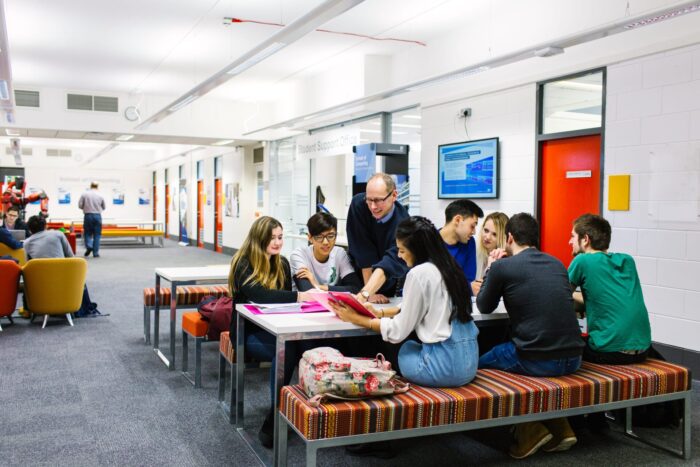
Our subject taster workshops for Key Stages 3, 4 and 5 introduce your students to new topics and give an insight into the university experience. These one hour sessions include information about Arts & Humanities courses, skills gained from these degrees and careers available to graduates.
Our workshops, facilitated by our postgraduate students, can either be delivered in school or online.
Requesting a live workshop
In line with our widening participation targets we prioritise workshops (online and in school) to state schools but will review requests from all schools. Our recorded workshops across a range of subjects are available to all.
Please be aware that due to a limited budget we can only deliver live in school workshops to schools which are within two hours of the university by public transport. We are able to offer workshops for a minimum of 12 attendees.
Browse our selection of workshops and send a request below.
Request a live session
Want to stay up to date with our free taster sessions?
Art and design
Why study women's art practices? (KS3-4)
This interactive academic taster session introduces students to the value and relevance of studying women’s art practices through a feminist lens. Through guided discussion and collaborative analysis of selected artworks, students will engage with questions about visibility, representation, and historical narratives in art. The session encourages curiosity, critical thinking, dialogue, and reflection on how art can challenge dominant ways of seeing and thinking.
From self‑portraits to selfies: identity then and now (KS5)
This workshop invites students to explore the fascinating world of self-portraiture, tracing how artists have depicted themselves from the Renaissance to the present day. Through lively discussion and visual analysis, we will consider why artists choose to represent themselves, how identity is constructed and communicated, and what self-portraits reveal about society and the individual. The session encourages students to reflect on their own self-image and the ways we all present ourselves—both offline and online.
By the end, students will understand the significance of self-portraiture in art history, identify key artists and works, and analyse how visual elements express identity, emotion, and social position. They will also reflect on their own experiences of self-representation in the digital age. Discussion prompts include: Why do artists depict themselves? How do self-portraits differ across time and cultures? How do we curate our own image today? Case studies: Frida Kahlo, Cindy Sherman, Vincent van Gogh, Albert Dürer, Zanele Muholi, Rembrandt van Rijn, Virginia Errázuriz, Élisabeth Vigée Le Brun.
English
Introduction to linguistics (KS4-5)
How do languages sound? Why do we sound different from each other? How do languages vary and change?
These all are questions a linguist might ask. Find out answers to these questions and explore many more issues thanks to this introduction to linguistics. This session starts by defining 'what is a linguist', explains what language is and offers an enquiry into multiple areas of study in linguistics. Delivered by linguistics academics from the School of Languages, Culture and Societies, this introduction is ideal for English language and languages students.
History
Mapping careers for history graduates (KS4-5)
Did you know that history is one of the most sought-after degrees by graduate employers? Through interactive activities, students will explore the diverse career opportunities available to history graduates in law, history, business, journalism and many other sectors. They will learn about the range of transferrable skills you can develop by studying history. Students will also hear about the variety of history courses at the University of Leeds. This is an opportunity to speak to a history graduate, ask questions and hear first-hand how a history degree can give you an advantage in a competitive graduate job market.
This talk is ideal for KS4-5 students to help them understand the value of a history degree.
Material culture: how everyday objects can teach us about the past (KS4)
Material culture studies use objects as primary sources to understand history and human culture.
Using both historical and modern examples, this workshop will show your students how the objects people use every day can teach us about the societies and cultures they come from.
This workshop focuses on teaching students how to practice object analysis, developing their critical thinking, inference skills, and creativity. By showing your students how to analyse objects using methods from material culture studies, this workshop offers them insight into studying history at a higher level and supports the development of their GCSE source analysis skills.
Students will also be encouraged to reflect on how approaches, like material culture studies, can enrich our understanding of history, particularly the histories of marginalized groups excluded from written records.
Resilience and resistance: sports and the Holocaust in France (KS4-5)
We often talk about the Holocaust and learn about it in our schools, but do we actually understand what the holocaust was? Who was involved, where did it happen and crucially, how did people resist?
This workshop aims to share an alternative narrative to Holocaust history through learning the stories of French sportspeople sent to concentration camps. From Alfred Nakache, the Jewish Algerian Olympic swimmer, who survived Auschwitz to go on to compete in the London Olympics, to Victor Young Perez, a young Tunisian Jewish boxer who helped his community resist Nazism through sports. This workshop will help young people develop critical thinking skills, using real primary sources and archives to discover this untold story of bravery for themselves. Holocaust history can often feel like a far-away, unrelatable story for young people. Through sports, we can help our next generation foster a more personal understanding of Holocaust victims and survivors.
Languages
Language beginners taster workshop - Chinese, Japanese, Portuguese (KS3-5)
Let's get your students excited about studying languages! Our beginner language taster workshops showcase some of the beginner languages taught at the University of Leeds and introduce your students to a language subject they may not have studied before. The workshops are interactive, they have been designed to spark your students' interest and we hope will encourage the uptake of languages through school, college and onto Higher Education. All sessions can be adapted to suit the age group of your students and your school timetable.
Josephine Baker: a cultural and historical icon (French KS5)
Josephine Baker was an inspirational Black woman who broke barriers as a performer, resistance fighter, and civil rights activist. Her remarkable life and contributions to race, gender, and cultural struggles deserve to be widely recognised. This session aims to introduce Baker to a younger audience, casting light on a powerful and inspiring story that challenges dominant narratives which often overlook women like her.
Through her extraordinary career, activism, and her induction into the Panthéon, Baker’s story is not only a celebration of her legacy but also an opportunity to connect with French culture and history. This interactive session combines language learning with historical exploration, offering students the chance to enhance their written and verbal skills as well as their source analysis skills, whilst engaging with a diverse and globally significant figure. Importantly, it showcases a more inclusive perspective on history and culture that students can explore further at university.
Eva Perón: spiritual leader of the nation of Argentina (Spanish KS5)
Eva Perón was an iconic figure who championed social justice and women's rights as the First Lady of Argentina. Her extraordinary contributions to labour rights, political advocacy, and the empowerment of the underprivileged have cemented her legacy as one of the most influential women in history. This session aims to introduce Perón to A-level students, shedding light on a compelling story that challenges dominant narratives by highlighting the role of women in shaping 20th-century political and social movements.
Through her groundbreaking work with the descamisados (the working class) and her advocacy for women’s suffrage, Eva’s life offers a profound lens into Argentine history and culture. This interactive session blends historical exploration with language learning, allowing students to refine their written and verbal skills while engaging with a figure of global importance. Importantly, it encourages a more inclusive approach to studying history, showcasing a perspective that students can delve into further at university.
Introduction to linguistics (KS4-5)
How do languages sound? Why do we sound different from each other? How do languages vary and change?
These all are questions a linguist might ask. Find out answers to these questions and explore many more issues thanks to this introduction to linguistics. This session starts by defining 'what is a linguist', explains what language is and offers an enquiry into multiple areas of study in linguistics. Delivered by linguistics academics from the School of Languages, Culture and Societies, this introduction is ideal for English language and languages students.
Language acrobatics: an introduction into the world of the simultaneous interpreter’s working brain (KS3-5)
In this session, students will dip into the world of simultaneous interpreting. They will gain an understanding of what interpreters do and how they do it. This session has a practical focus and students will have the chance to challenge their brains in fun activities while using some essential interpreting skills!
Please note that this session is only available in person to schools which are two hours away from York by public transport.
Resilience and resistance: sports and the Holocaust in France (KS4-5)
We often talk about the Holocaust and learn about it in our schools, but do we actually understand what the holocaust was? Who was involved, where did it happen and crucially, how did people resist?
This workshop aims to share an alternative narrative to Holocaust history through learning the stories of French sportspeople sent to concentration camps. From Alfred Nakache, the Jewish Algerian Olympic swimmer, who survived Auschwitz to go on to compete in the London Olympics, to Victor Young Perez, a young Tunisian Jewish boxer who helped his community resist Nazism through sports. This workshop will help young people develop critical thinking skills, using real primary sources and archives to discover this untold story of bravery for themselves. Holocaust history can often feel like a far-away, unrelatable story for young people. Through sports, we can help our next generation foster a more personal understanding of Holocaust victims and survivors.
Language in the digital age: understanding and exploring career possibilities (KS4-5)
Are your language students curious about becoming a translator or interpreter? Are they interested in how languages are used and interact with us in the digital world? This session introduces students to what translation modules involve, the skills developed through study, and the key working area in the field.
Students will also be introduced to language technology, including commonly used tools in the translation industry, with explanations of how they work through real-world examples and how language professionals collaborate with technology in practice.
Finally, students will reflect on the skills gained through language study, such as communication and cultural awareness, and explore how these skills can lead to a wide range of career opportunities in language-related fields.
Music
Design a global pop band (KS4-5)
What does it take to launch a global pop band? In this session, students will get to take on the role of promoters and managers to design a pop band to navigate the risks and opportunities of the increasingly global, internet-mediated creative industries. Using examples from around the world, this taster workshop will encourage students to think about the intersection of business and creativity. It serves as a short introduction to the BA Global Creative Industries course in the School of Performance and Cultural Industries.
Who would this session suit best?
This is an interdisciplinary session that would suit students with interests in, or who are studying English language and literature, business, music, performance, and digital technologies.
Music, mind, and memory: how sound shapes studying (KS4-5)
What happens when you study with music? In this session, students will step into the role of researchers to explore how different sound environments — calm music, rock music, and silence — affect memory. Through hands on experiments, group discussion, and creative playlist building, this taster workshop will encourage students to think about the intersection of science, music, and everyday study habits. It serves as a short introduction to the field of music psychology, showing how creativity and research combine to answer real world questions about learning and wellbeing.
Who would this session suit best?
This is an interdisciplinary session that would suit students with interests in, or who are studying psychology, music, education, or cognitive science. It is accessible to students from a variety of subject backgrounds and requires no prior knowledge — just curiosity about how sound and memory interact.
Philosophy, religion and humanities
Could artificial intelligence ever be free? on defining what it takes for something to be free and morally responsible (KS4-5)
This session explores the concept of free will and its role in moral responsibility. What does it mean for someone—or something—to act freely? And how does this connect to the way we judge actions as right or wrong? With recent technological advancements, we often describe the behaviour of AI in ways similar to how we talk about human actions. But does this comparison hold up? We will consider whether advanced technologies like robotics could ever meet the criteria for acting freely, and what that would mean for how we morally judge them.
Here, we will also examine whether free will depends on an entity being conscious—and, if so, whether AI could ever meet this condition. Drawing on topics from the A-level curriculum, students will discuss different philosophical perspectives, such as dualism and materialism, and reflect on the implications of their views on the future of AI.
Who would this session suit best?
This session is designed for Key Stage 4 and 5 students of all abilities. It could serve as an engaging introduction to philosophy, or it could be used to supplement students who are studying the A-level philosophy specification. In particular, it provides an alternative perspective on themes related to the philosophy of mind.
Theatre, performance and global creative industries
Design a global pop band (KS4-5)
What does it take to launch a global pop band? In this session, students will get to take on the role of promoters and managers to design a pop band to navigate the risks and opportunities of the increasingly global, internet-mediated creative industries. Using examples from around the world, this taster workshop will encourage students to think about the intersection of business and creativity. It serves as a short introduction to the BA Global Creative Industries course in the School of Performance and Cultural Industries.
Who would this session suit best?
This is an interdisciplinary session that would suit students with interests in, or who are studying English language and literature, business, music, performance, and digital technologies.
Museum makers: create, curate and captivate (KS3-5)
What actually goes on behind the scenes in a museum — and who does it?
In this fast-paced, interactive session, students dive into the world of cultural and creative careers, exploring what cultural institutions are and the many different jobs that make them work.
Working in small groups, students are given a mystery object and a creative job — from social media manager to exhibition designer. Their challenge? Bring the object to life for a specific audience using storytelling, creativity and quick thinking.
The session builds confidence, teamwork and communication skills, challenges stereotypes about creative careers, and helps students see how their interests could connect to future study or work in the cultural sector. Engaging, practical and fun — no prior knowledge needed. Perfect for KS4 and KS5 drama students but can be adapted for any age group or subject.
Exploring the Four Models of Power (KS3-5)
What is power? Who holds it? What does it mean to have power?
Knowledge of power is integral in understanding our society; it helps us see our purpose, the forces against us, and how we can take action and make change.
This workshop creates an embodied learning environment, using movement, games, and exercises to enhance knowledge of the concept of power. Exploring the four models of power, students will use non-verbal communication, discussion, and reflection, to challenge their understanding of the meaning of power.
Working in small groups and as a whole community, students will take away a collective understanding of power and reflect on the skills they’ve explored through the workshop.
The theme of power is interdisciplinary meaning the workshop is suitable for both drama and non-drama students.
For students studying drama, the workshop explores key devising methods and introduces them to the concepts of applied theatre and social change.